Bedding · Pillow care
Pillowcase Fit and Fabric: A Guide to Comfort and Care
A pillowcase is a modest piece of cloth with an unusually intimate assignment: it spends the night against the face, takes the brunt of a restless turn, and is expected to remain clean, comfortable and presentable by morning. Its fit, fabric and construction matter more than its quiet appearance suggests.
The simplest way to choose a pillowcase is to begin not with colour or thread count, but with the pillow itself. Measure its length and width, consider how lofty it is, and look at the way it is filled. A case that fits well can help keep the pillow covered and smooth. One that is too large may gather into soft, untidy folds; one that is too small may strain at the seams or press down on the pillow’s fill. The aim is not to make the pillowcase disappear, exactly, but to have it do its work without announcing itself.
Then comes the fabric: cotton, linen, silk, and other fibres each bring their own surface, weight and laundering needs. There is no universal best choice. The right one depends on what feels pleasant against the skin, what suits the pillow’s shape, and what can be cared for without turning laundry day into a negotiation. A few minutes spent checking measurements and care instructions can make a noticeable difference to the feel of the bed—and to how long the pillow remains protected.
Begin with the pillow, not the label
Pillowcase sizes are often described using familiar bedding terms such as standard, queen or king. Those labels are helpful, but they are not a substitute for measurements. Dimensions can vary between makers, and the same nominal size may feel different depending on the cut, fabric and finishing. Measure the pillow from edge to edge, laid flat and uncompressed. If it is unusually deep or full, note that as well.
A case has to accommodate more than a pillow’s flat outline. Its fill expands, shifts and recovers as it is used. A plump down or feather pillow may need a little more room than its measurement alone seems to imply, while a firmer or more compact pillow may sit neatly in a closer-fitting cover. Memory foam pillows, with their more defined shape and limited capacity to compress, can also behave differently from traditional filled pillows. The product label or manufacturer’s sizing advice is worth checking when a pillow has a distinctive construction.
When comparing the pillow and case, consider both dimensions and depth. If the case is shorter or narrower than the pillow, it may pull tight at the corners, place pressure on seams or flatten the fill. If it is substantially larger, the extra fabric can bunch beneath the head. That looseness is not always a problem—some people prefer a relaxed, easy-to-change case—but it can make the bed feel less orderly and may allow the pillow to shift inside.
If the pillow falls between two sizes, avoid assuming that the smaller option will simply stretch to fit. Woven fabric has some give, but that is not the same as reliable extra capacity. A little ease is useful; persistent strain is not. Check the finished measurements where they are available, and remember that washing and drying may alter the size of some fabrics, particularly if they are laundered at high temperatures.
A good fit has room to breathe
The case should enclose the pillow without crushing it. With the pillow inserted, the corners should reach their ends without being forced, and the fabric should lie reasonably flat rather than pull taut across the surface. If the pillow bulges conspicuously or the opening will not close in the way it was designed to, the case may be too small—or the pillow may be too full for that particular cut.
Too much compression can change the pillow’s feel. A lofty pillow forced into a snug case may lose some of its height; a firm pillow can press against the seams and make the cover harder to remove. On the other hand, a very generous case can fold and gather, creating ridges under the cheek. Some sleepers barely notice such folds. Others, particularly those who are sensitive to surface texture, may find that they become the night’s most persistent detail.
To test a fit, place the pillow inside and smooth the case by hand. Check the corners, seams and opening, then lie on it as you normally would. Does the fabric stay in place? Does the pillow retain its usual shape? Is there a fold where your face rests? These simple observations are more useful than relying on a size name alone. If the pillow has an adjustable fill, make any changes before settling on the case size; a case should not be expected to correct a pillow that has been overfilled.
The opening: a small design decision
The opening determines how readily a case can be changed and how much of the pillow remains covered. The simplest design is open-ended: the pillow slides in through one side, and an overlap or tuck may help keep it enclosed. This familiar construction has few parts to wear out and is generally easy to launder. Its success depends on the length of the opening and the depth of the overlap, as well as on how the case sits on the pillow.
An envelope closure uses a fabric flap to fold over the end of the pillow. It can help keep the pillow concealed without adding a hard component. The flap should be long enough to do its job but not so bulky that it creates an uncomfortable lump. Some cases use buttons, ties or other fastenings. These may provide a secure finish, but the details deserve a close look: a fastening that is uncomfortable against the skin, difficult to manage or vulnerable to snagging can make an otherwise attractive case less practical.
Whatever the construction, ask how it will behave in regular use. A case should be straightforward to remove for washing and easy to put back on without wrestling the pillow into place. Check that any closure can be laundered according to the care label, and consider whether it could catch on other items in the wash. A well-designed opening is not a grand feature. It is simply the one you stop thinking about after the first few changes.
Fabric changes the experience
A pillowcase sits close to the skin for hours, so its surface matters. Fibre, weave, yarn quality and finishing all contribute to how a fabric feels. A label that names the fibre is a useful starting point, but it does not tell the entire story. Two cotton cases can differ in softness and weight; two linen cases may have different textures and drape. The weave determines much of the surface character, while washing and finishing can alter the feel further.
Cotton is widely used because it is versatile and often straightforward to care for. Percale, a plain weave, tends to feel crisp and matte; sateen, with a different weave structure, generally has a smoother, more lustrous surface. Neither construction is inherently superior. Percale may appeal to someone who likes a light, crisp hand, while sateen may feel pleasing to someone who prefers a smoother touch. Fibre quality, yarn and construction still matter, so a weave name alone cannot predict every detail.
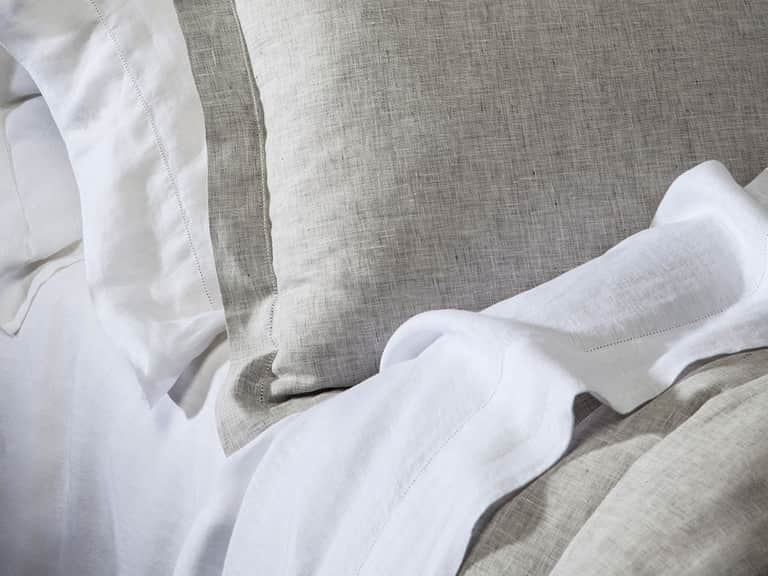
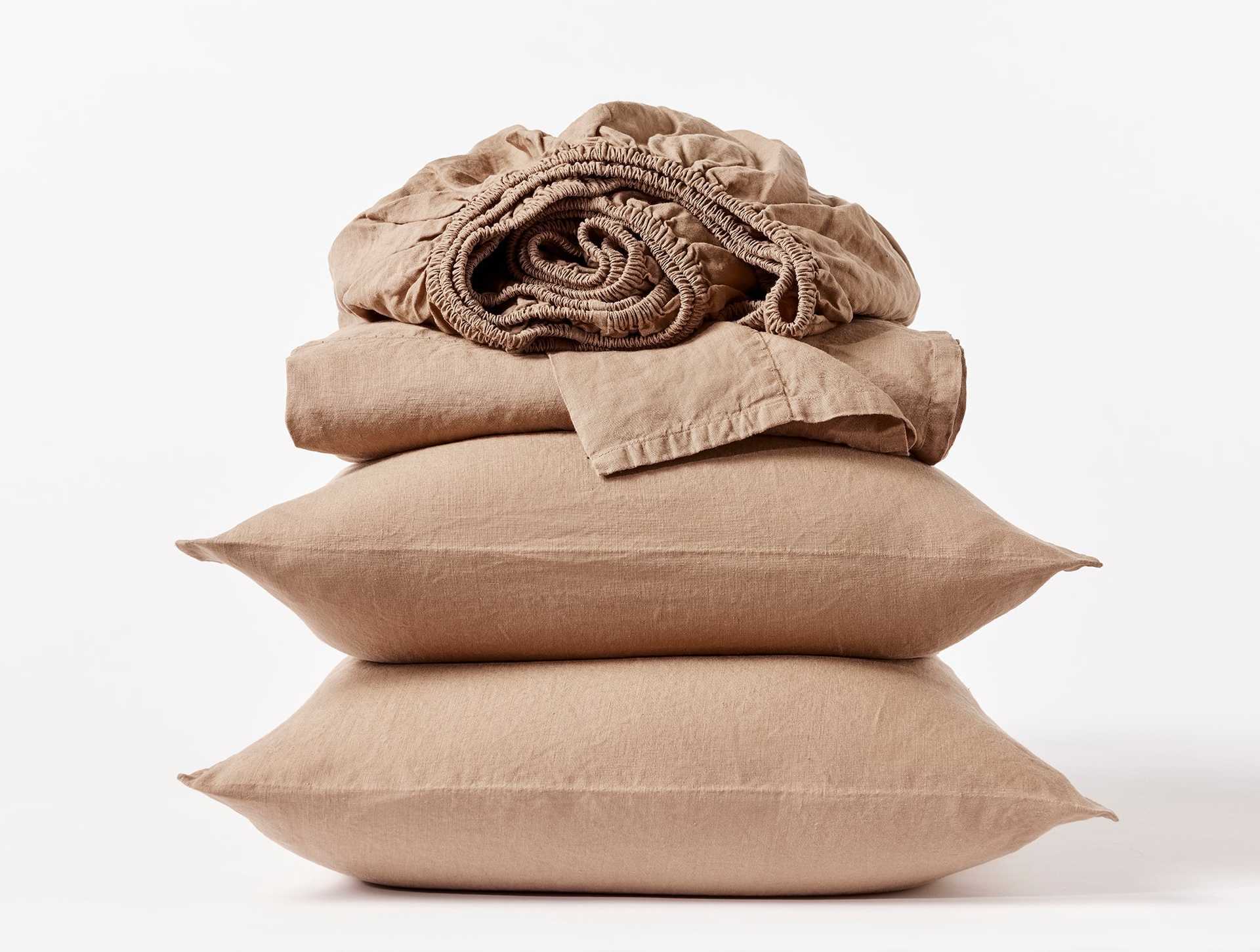
Linen is made from flax and is known for its distinctive, slightly textured surface. It often feels more relaxed than tightly smooth cotton and may soften with repeated laundering. Its natural creases are part of its character, rather than evidence that the case has failed at being a case. Linen can suit people who enjoy a less polished appearance and want fabric with a substantial, airy feel. The actual texture varies with yarn and weave, and the care instructions should guide washing and drying.
Silk offers a smooth surface and a different kind of drape. It is often chosen for its feel against skin and hair, but it may require more careful handling than everyday cotton or linen. Look for specific instructions on water temperature, detergent and drying. A silk-safe detergent may be recommended, and heat or direct sunlight can be unsuitable for certain silk articles. If a fabric needs special care, consider honestly whether that routine fits your household before choosing it.
Other fibres and blends are also available. Some are designed to feel cool, smooth, crisp or easy-care; the result depends on both the fibre and the fabric construction. Read the composition label rather than relying on a broad phrase such as “natural feel.” If you are sensitive to a particular texture or finish, a small sample or a chance to handle the fabric can be more informative than a product description.
Breathability, warmth and personal preference
Pillowcases do not determine sleep temperature on their own. Room conditions, the pillow’s fill, the rest of the bedding and individual comfort all play a part. Still, the surface and construction can influence how warm or cool a case feels at first contact and how comfortable it remains through the night. A smooth, dense fabric may feel different from a lighter, more open weave; the distinction is perceptible, but no textile can guarantee a particular sleep outcome for every person.
If you tend to feel warm, consider a fabric and weave that feel light and comfortable to you, and avoid choosing solely by a marketing promise. If you prefer a cosier surface, a more substantial hand may be appealing. Touch can be useful when available: rub the fabric between your fingers, notice whether it feels crisp or slick, and consider if its weight is pleasant against the face. Your own response is a better guide than claims that a fabric will suit everyone.
People with sensitive skin may also want to pay attention to dyes, finishes, fragrance and detergent residue. A newly purchased case can be washed before use if its care label permits. Use the recommended amount of detergent and make sure the rinse is adequate. If irritation persists, seek advice from a qualified health professional; fabric choice is not a substitute for medical guidance, and no particular fibre can be assumed to prevent allergies or skin conditions.
Construction details worth noticing
A pillowcase’s durability is shaped by more than its headline fabric. Look at the seams, hems, corners and finish around the opening. Even stitching and well-finished edges are signs of considered construction. A decorative flange or embroidered detail can lend a case a more tailored appearance, but it should not interfere with comfort or make the item difficult to wash. Turn the case inside out if possible and inspect its seams before the first laundering.
Thread count is frequently used as a shorthand for quality, but it cannot describe every aspect of a textile. The number refers to threads counted in a defined area of fabric, and comparisons can be misleading when fibre, yarn, weave and manufacturing methods differ. A very high figure does not automatically mean a more comfortable or durable pillowcase. Pay attention to the full specification: fibre content, weave, finished size, construction and care requirements provide a more useful picture.
Colour and finish matter in practical ways, too. Dark and bright shades may require separate laundering at first, while delicate embroidery may call for gentler handling. A plain, light-coloured case can make marks easier to spot; a patterned one may suit the room and disguise minor creasing. These are choices of use as much as taste. The best-looking case is not necessarily the one that works best in a particular laundry routine.
Read the care label before the first wash
A care label is not decorative fine print. It is the maker’s guidance for preserving the fabric and construction. Check the recommended water temperature, wash cycle, detergent, drying method and ironing instructions. When a label specifies a cold, gentle wash, do not assume that a warmer cycle will be harmless. Likewise, if a fabric is suitable for machine drying only at low heat, prolonged high heat may encourage shrinkage, weaken fibres or make the case feel rougher over time.
Wash pillowcases with similar colours and fabrics, and avoid overcrowding the machine. A crowded load has less room to move and rinse thoroughly. Fasten closures if the care instructions recommend it, and consider placing delicate cases in a laundry bag if snagging is a concern. Use detergent in the amount suggested for the load; extra soap is not a guarantee of extra cleanliness and can leave residue if it is not rinsed away.
Fabric softener is a matter for the care label and the textile in question. It may affect how certain fabrics feel or perform, so use it only when appropriate. If a case has an unusual finish, embellishment or delicate fibre, avoid improvised treatments. For stains, address them promptly with a method suitable for the fabric, testing a discreet area when necessary. Chlorine bleach and aggressive stain removers can damage fibres or alter colour, and should not be used unless the care instructions expressly allow them.
Remove cases from the dryer promptly if the instructions permit machine drying; this can reduce deep creasing. Air-drying may suit some fabrics, though direct, prolonged sunlight can affect colour. Ironing is usually optional, but it can help create a crisp finish for certain cotton or linen cases. If the relaxed look of linen appeals to you, ironing may be unnecessary. The point of care is not to make every pillowcase look new forever; it is to keep it clean and serviceable without imposing a routine more elaborate than the object requires.
A simple pillowcase check
Before buying or putting a case into regular use, work through a short list. It can prevent the particular disappointment of discovering that a beautiful textile is difficult to live with—or that a case that looked right in a folded stack is wrong for the pillow it was meant to cover.
- Measure the pillow’s length and width, and note its depth or loft.
- Compare those measurements with the finished dimensions of the case, not just its size name.
- Check that the pillow fits without being compressed or leaving excessive fabric gathered underneath.
- Consider the opening and any flap or closure: is it secure, comfortable and easy to manage?
- Read the fibre and construction details, including weave, finish and any decorative elements.
- Make sure the care instructions fit the way you normally wash and dry bedding.
- Wash the case before use if appropriate, then assess how it feels after laundering.
The last step matters because a textile’s first impression is not always its settled one. Some fabrics soften with use; others retain a crispness that is part of their appeal. Washing may reveal whether the case keeps its shape, how readily it dries, and whether its surface becomes more comfortable over time. If it pulls tight, shrinks unexpectedly or feels unpleasant after laundering, that is useful evidence for future choices.
Cleanliness without ceremony
Pillowcases collect the ordinary traces of a night: skin oils, perspiration, hair products and dust from the room. Regular laundering is sensible, but the right frequency depends on personal habits, climate, skin and hair care, and the care requirements of the fabric. A fresh case is especially welcome after illness or when it has become visibly soiled. Keep a spare set available so that changing the bed is a simple exchange rather than a postponed chore.
The pillow itself also deserves attention. A clean case helps limit direct contact with everyday soils, but it does not make the pillow immune to them. Follow the pillow maker’s instructions for cleaning and airing, since different fills respond differently to water and heat. A pillow that cannot be washed should not be treated as though it can; a pillow that is washable still needs to be dried thoroughly according to its label.
For households managing dust sensitivities or other health concerns, follow guidance from relevant healthcare professionals and product manufacturers. A particular fabric or closure should not be treated as a medical solution. What can be said with confidence is more modest: a well-fitting, washable case can help keep a pillow covered, and a dependable laundering routine makes that protection practical.
Comfort is a combination, not a count
Choosing a pillowcase can seem like a small decision because the object is small. Yet it brings together several kinds of judgment: measurement, touch, care and appearance. A case should suit the pillow’s dimensions; its opening should keep the pillow enclosed without becoming a nightly obstacle; its fabric should feel agreeable to the person using it; and its laundering instructions should be realistic.
Luxury, in this setting, need not mean a complicated textile or an extravagant specification. It may mean a case that is soft in the way you like, stays in place, washes without fuss and continues to feel good after many turns through the laundry. For one person, that is crisp cotton. For another, it is gently rumpled linen or smooth silk. The label can describe the material, but only use can settle the question of comfort.
Start with measurements, pay attention to construction, and choose a fabric whose upkeep suits your life. The result is not merely a neater bed. It is a pillow that remains properly covered, a surface that feels considered against the skin, and one less small inconvenience to encounter at the end of the day.