Bedding · A practical guide
What Makes a Duvet Cover Work Well? Fabric, Fit and Finishing Details
A duvet cover has two jobs that are easy to confuse: it must make a bed look composed, and it must make the daily business of sleeping, washing and remaking that bed feel uncomplicated. Fabric, dimensions and small construction choices determine whether it manages both.
Published 2 November 2026
A duvet cover is often chosen at a distance. From the doorway, it is colour, pattern and the pleasingly uninterrupted surface of a made bed. Up close, it is a more practical contrivance: a large fabric envelope that must accommodate a duvet, stay reasonably in place through a night’s turning, survive laundering and return to the bed without becoming a wrestling match. Its appearance matters, but the details that make it work are mostly found at the edges, inside the seams and on the care label.
Choosing well begins with a useful distinction. A cover does not create the duvet’s warmth; the insert does most of that. The cover does, however, influence how the bedding feels against the skin, how air and moisture move through the layers, how the duvet falls across the bed and how much effort it takes to keep the whole arrangement tidy. The best choice is therefore not a matter of finding a universally superior fibre. It is a matter of matching material, construction and dimensions to the way a household actually sleeps and cares for its linens.
First, decide what “comfortable” means
People use the word comfort to describe several different things. One sleeper wants a cool, dry-feeling surface; another wants the softness of a fabric that has already been washed many times. Some enjoy the relaxed irregularity of linen, while others prefer the smooth, even finish of cotton sateen. There are also practical considerations: a cover may feel wonderful in a shop but be less appealing if its care instructions require more attention than the household can give it.
It helps to notice what is already working—or not working—on the bed. Does the current cover feel clammy by morning, or simply too warm because of the duvet beneath it? Does it slide off the insert, bunch around the feet or come out of the wash in a tangle? These are different problems with different remedies. A more breathable fabric might affect the feel of the surface; a better-fitting cover and well-placed ties might address bunching. Changing the cover cannot, by itself, solve every temperature or comfort issue, but it can remove some avoidable irritations.
Fabric: the character of the surface
Natural fibres are common in fine duvet covers because they can be woven into fabrics with a range of useful textures and finishes. Linen and cotton are familiar examples, but the name of the fibre is only the opening line. Fibre quality, yarn preparation, weave, finishing and laundering all affect the fabric that eventually reaches the bed.
Linen: texture, movement and a relaxed drape
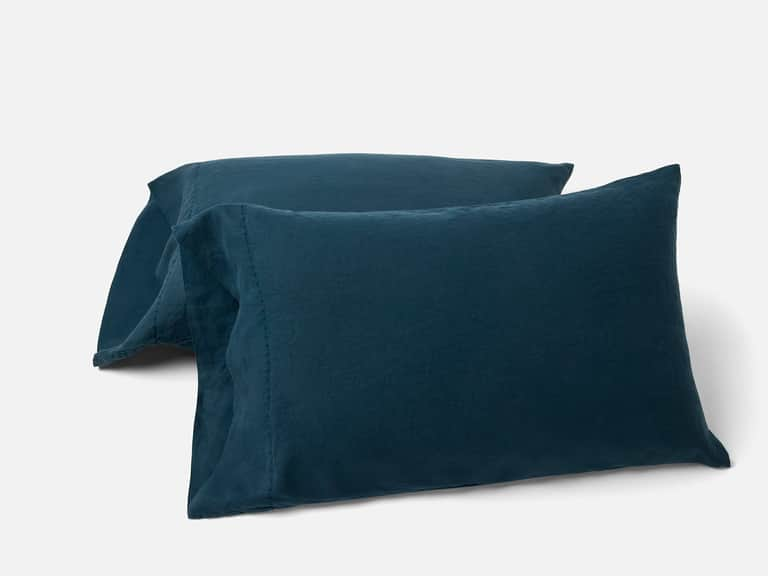
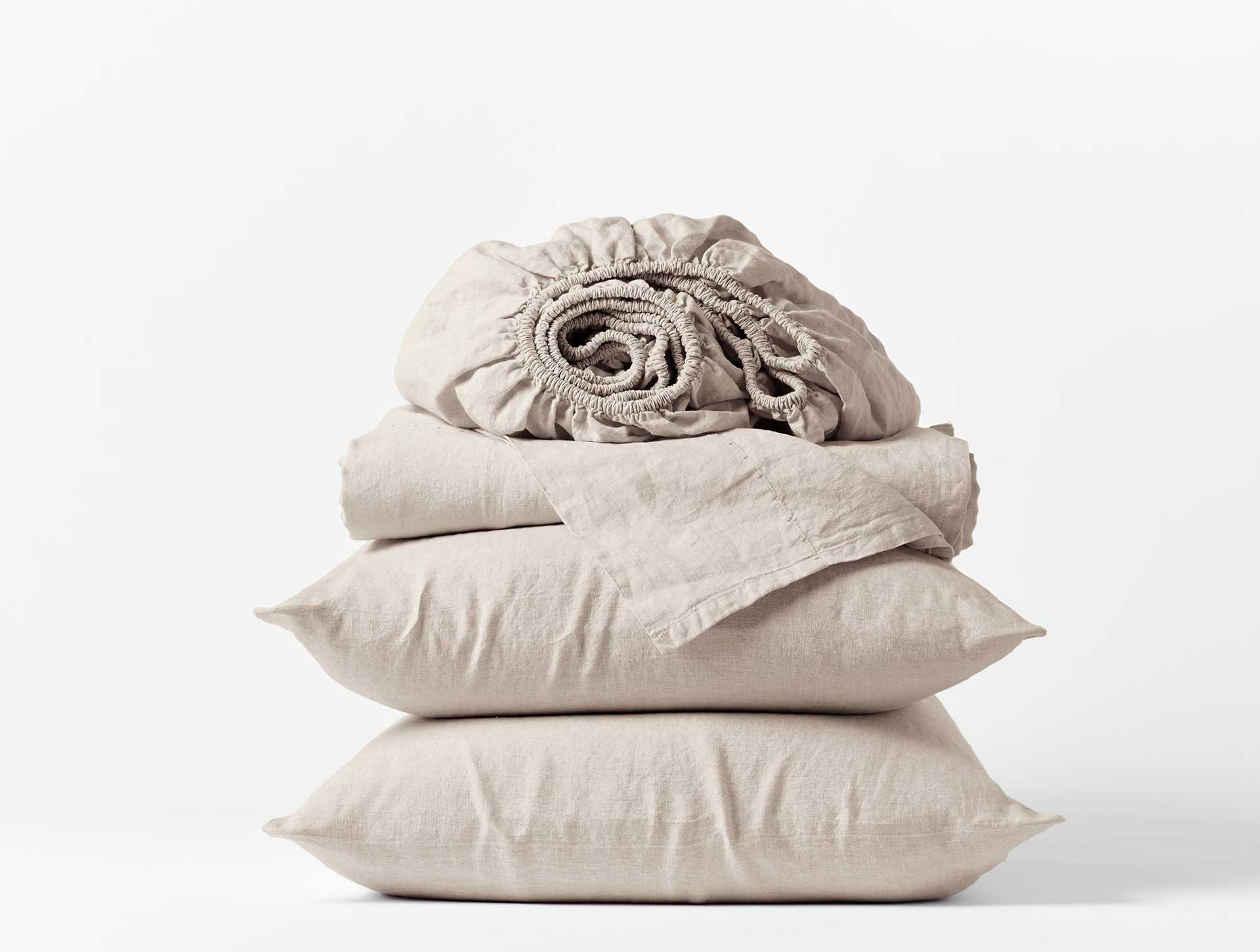
Linen is made from flax fibre. In bedding, it is prized for its tactile texture and its characteristic drape: it tends to fall with a little more substance and natural irregularity than very smooth cotton. That surface is not necessarily a sign of roughness or poor quality. Many linen covers are washed or otherwise finished to give them a softer, more relaxed hand from the outset; regular laundering can change the feel further over time.
Linen’s open, breathable character is often appreciated by people who prefer bedding that does not feel dense against the skin. How cool a bed feels depends on more than the cover, however. Room temperature, the duvet’s filling and weight, sleepwear and individual preference all play a part. Linen is not a promise of a particular night’s temperature. It is one component in a bedding system, and its appeal lies as much in its texture and easeful appearance as in its practical qualities.
Consider the finish as well as the fibre. Stonewashed linen, for example, generally has a more immediately relaxed appearance than a crisp, newly pressed cloth. Details such as a hem, flange or lace trim change the mood without changing the fundamental nature of the fabric. The Bovi Vintage Linen Duvet Cover pairs European stonewashed linen with a delicate lace trim, an example of how a traditional decorative detail can sit alongside the informal drape associated with washed linen. The relevant question is not whether ornament is inherently better or worse, but whether it suits the room and the way the cover will be used.
Cotton: crisp, smooth or somewhere between
Cotton can take on markedly different personalities. Percale is commonly associated with a crisp, matte feel and a more open, plain-weave surface. Sateen, made with a different weave structure, tends toward a smoother hand and a subtle sheen. Neither is automatically more luxurious. The preference is personal, and the practical feel depends on the particular yarns, fabric weight and finish.
Thread count is an incomplete way to compare cotton covers. It describes the number of threads counted within a defined area, but it does not tell the whole story about fibre quality, yarn construction, weave or finishing. A high number on a label cannot, by itself, guarantee a better hand or longer service. It is more useful to look at the fabric description, care instructions and construction together, then consider whether a crisp or smooth surface is the one you actually want to sleep under.
Blends and other materials
Blended fabrics may combine fibres to alter feel, durability, care or price. Their performance depends on the specific blend and construction, so the word “blend” alone is not a verdict. Check the fibre percentages on the label, and be wary of assuming that two fabrics with similar names will behave the same way. A cover intended for frequent home laundering should be considered in that light from the beginning, rather than after a disappointing first wash.
Weave and weight: why fibre labels are not enough
Fibres become fabric through weaving or knitting, and the structure changes the way the material handles. Duvet covers are commonly woven. A tighter or looser weave can affect the surface, drape and perceived weight; the way yarns are prepared and finished matters too. A loosely textured linen may feel quite different from a fine, tightly woven one, even if both are made from the same fibre.
Weight is sometimes stated in grams per square metre, but a single measurement does not describe the entire experience. A heavier cover may feel more substantial and fall more firmly; a lighter one may feel less present on the bed. Neither is the right choice for everyone. Consider the cover alongside the duvet insert: an already heavy duvet paired with a weighty cover can produce a bed that feels reassuring to one person and cumbersome to another.
There is also the question of finish. Garment washing, stonewashing and other treatments can soften a fabric or give it a more settled appearance before it is used. Such processes should not be mistaken for a substitute for sound construction, nor do they mean every cover will soften at the same rate. The most reliable guide is the maker’s material and care information, not a general expectation that all natural fabric will behave identically.
Fit: the quiet arithmetic of a good bed
A cover that is too small compresses the duvet and may pull awkwardly at its seams. One that is substantially too large can leave the insert roaming inside, gathering in corners or folding over itself. The dimensions of the cover should be compared with the dimensions of the duvet insert—not simply with the mattress size or the familiar name of the bed.
Size labels can be deceptively reassuring. “King” is not a universal measurement across every manufacturer or market, and a bed sold under one designation may be dressed with an insert of different dimensions. Before choosing, read the actual width and length in the product details and, if possible, measure the duvet. A small discrepancy may be intentional or tolerable, but a significant one can affect both appearance and use.
It is worth checking the duvet’s fill and loft as well. A lofty insert can occupy more of the cover than a flatter one with the same nominal dimensions. If the fit has been troublesome, measure the insert rather than relying on its label. When replacing only the cover, keep the existing duvet’s dimensions close at hand; when replacing both, check that their measurements are compatible before laundering or dressing either piece.
Construction affects fit at the bed itself. A cover’s finished dimensions may not tell you how it will sit after washing, so follow the stated care instructions and any information about expected shrinkage. Fitted sheets have to contend with mattress depth; duvet covers have a different task, but the same general lesson applies: dimensions are functional information, not a decorative footnote.
Closures: small mechanisms, large consequences
The opening is where the cover becomes either a straightforward household textile or an annual test of patience. Common closures include buttons, zippers, ties and overlapping fabric flaps. Each has advantages, and none is perfect in every circumstance.
- Buttons are familiar and easy to inspect. Their spacing and attachment matter: loose stitching can fail under repeated handling, while a generously overlapped opening may help keep the insert enclosed.
- Zippers can close an opening quickly and neatly. Check that the zipper is designed to lie comfortably and that its placement does not create an awkward edge at the foot of the bed.
- Ties can help secure the duvet at its corners or along its edges. Their value depends on their placement and on whether the insert has loops or other points to attach them to.
- An internal flap uses an extra fold of fabric to cover the opening. It can keep the finish visually simple, though it does not replace ties if the duvet tends to shift inside.
Internal ties are especially worth examining if the insert regularly migrates. Corner ties hold the duvet near its corners; additional ties may offer more points of restraint, depending on the design. They are not magic, and a cover with ties still needs to be matched to an insert of sensible dimensions. But when the pieces fit, ties can reduce the familiar phenomenon in which the duvet retreats to one end of its cover during the night.
Look at closure details as part of the whole design. Coconut-shell buttons, for instance, may contribute a natural decorative note, while a concealed flap leaves a quieter edge. The most elaborate option is not necessarily the most convenient. Consider how often the cover will be washed, how much time you want to spend changing it and whether the fastening will remain easy to handle after many cycles.
Finishing: where restraint and workmanship meet
Finishing details give a cover its visual voice. Hemstitching, a flange, piped edges, embroidered lines or lace can introduce structure and distinction without changing the basic function of the cloth. These details also influence how the cover layers with sheets and pillowcases. A plain, softly washed fabric may be the calmest choice in a room with patterned furnishings; a narrow decorative border can provide definition when the rest of the bedding is quiet.
Inspect the seams and edges, not only the visible trim. Even stitching, cleanly finished seams and secure fastenings are useful signs of considered construction. A large duvet cover is handled by its corners and openings, laundered repeatedly and often pulled into place by more than one person. Its less glamorous details bear much of that work.
Colour deserves similar attention. Deep or saturated shades may show fading more readily than pale neutrals, though the outcome depends on dyes, processing and care. Wash colours according to the label, separate new or strongly coloured textiles when appropriate, and avoid assuming that a “colourfast” description means a fabric is immune to every laundering condition. Sunlight, detergents and excessive heat can all affect the life of colour.
Care: the test that begins after purchase
A cover is a large piece of fabric, and its care instructions should be treated as part of the selection process. Check the recommended water temperature, cycle, drying method and ironing guidance. If the instructions call for gentle washing and prompt removal from a low-temperature tumble dryer, decide whether that routine suits your household. The most elegant care plan is the one you can follow consistently.
For many washable covers, using an appropriate load size and avoiding excessive detergent helps reduce residue and unnecessary stress on the fabric. A crowded machine may not allow bulky bedding to move freely or rinse well. Drying at high heat can be harder on fibres than gentler settings, and overdrying may leave some fabrics feeling harsher or more creased. Follow the garment’s own label: specific manufacturer guidance takes precedence over general advice.
Creases are not always a defect. Linen in particular is often chosen for a relaxed, lived-in appearance, in which case pressing every fold would defeat the purpose. Cotton percale may be prized precisely for a more orderly look. The right standard is not a hotel-bed ideal applied to every household, but a finish that makes the room feel comfortable to the people who use it.
A concise checklist before choosing
Before settling on a duvet cover, consider these questions together rather than treating any one specification as decisive:
- Does the fabric feel and look right to you—textured linen, crisp percale, smooth sateen or another construction?
- Are the cover and duvet insert close in measured width and length?
- Does the cover include internal ties, and will they connect to the insert you already own?
- Is the opening secured in a way that feels manageable when changing and washing the cover?
- Do the care instructions fit your laundry routine?
- Will the colour, trim and texture work with the sheets and the rest of the room?
- Does the product description clearly identify the fibre, construction and dimensions?
The useful kind of luxury
Fine bedding is sometimes described as though luxury were a single sensation: softness, perhaps, or a certain polished look. In practice, it is often the accumulation of small, sensible choices. A fabric that feels good to sleep beneath. Dimensions that let the duvet lie without fighting its cover. Ties that keep the insert where it belongs. A closure that is easy to handle and care instructions that do not turn laundry day into an act of contrition.
There is room for pleasure in the decision, too. A stonewashed linen cover can bring a quiet, unstudied texture to a room; a crisp cotton weave can make the bed feel orderly and fresh; a fine trim can lend a little ceremony to an otherwise simple arrangement. None of these choices is correct in the abstract. The cover works well when its beauty and its daily behaviour agree—when it looks considered in the morning and remains easy to live with the rest of the week.